

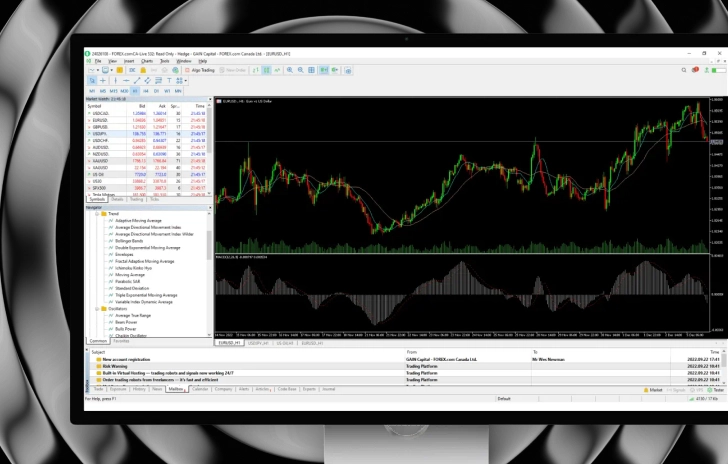
The mt4 platform is a widely used electronic setting that delivers traders with resources for considering economic markets, observing cost graphs, and handling trades. Its screen combines industry data with complex examination features, letting users to study price activities and produce conclusions centered on explained techniques rather than depending completely on guesswork.
What Makes a Trading Platform Useful?
A good trading platform provides many necessary operates together. Traders may monitor rates, review famous data, analyze graphs, and manage instructions in one interface. The effectiveness of those features could be particularly useful when markets transfer easily and choices need to be built according to a predefined trading plan.
How Important Are Trading Statistics?
Data provide an even more target method to examine trading performance. Popular measurements contain gain rate, average income, normal reduction, maximum drawdown, and risk-to-reward ratio. Taking a look at these figures over a completely big quantity of trades may disclose designs that may possibly not be apparent from individual transactions.
How Do Charts Help Traders?
Graphs convert mathematical value data in to visual patterns. Traders can study various timeframes to comprehend short-term variations and broader industry direction. Historic charts may also help identify repeating help, resistance, energy, and volatility traits, though previous cost behavior can not guarantee future results.
What Role Do Technical Indicators Play?
Technical signals process industry data using mathematical formulas. Examples include going averages, momentum dimensions, and volatility-based indicators. Their purpose is to offer additional information which could support traders interpret market conditions. Using too many indications, nevertheless, can create unwanted difficulty and probably produce decision-making less clear.
Can Beginners Use Trading Platforms Effectively?
Sure, but familiarity should come before active trading. Novices can start by learning how maps work, knowledge get types, studying fundamental industry terminology, and training risk-management principles. Establishing these fundamentals may help reduce avoidable mistakes and create a more structured strategy to promote analysis.
Why Is Risk Management Important?
Chance management determines how much capital is subjected to personal trading decisions. Instruments such as for example stop-loss instructions, place dimension, and managed control will help restrict possible losses. Number strategy reduces chance, therefore traders must look into probable unfavorable outcomes before entering a position.
What Should Traders Measure Over Time?
Performance should be assessed applying multiple data as opposed to concentrating only on profitable trades. A good review can include complete return, percentage of earning trades, average trade result, drawdown, and consistency. Evaluating these proportions across different times can provide a clearer image of whether a technique is performing as intended.
Does Technology Guarantee Better Trading Results?
Engineering may improve access to information and make evaluation more effective, but it cannot assure profitable outcomes. Market prices are influenced by numerous financial, financial, and geopolitical factors. A advanced screen is most reliable when coupled with disciplined planning, sensible objectives, and suitable risk controls.

What Is a Professional Approach to Platform Use?
A specialist method involves preparation, consistency, and continuous evaluation. Traders should establish distinct objectives, record their decisions, review statistical effects, and adjust strategies when evidence helps a change. Managing trading as a procedure rather than a series of separated forecasts can inspire more disciplined decision-making and better long-term risk awareness.