

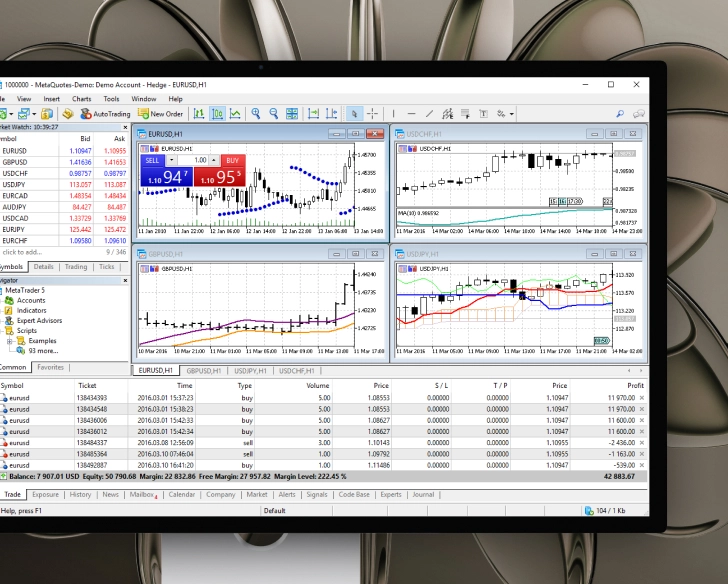
The mt5 trading platform is made to help traders in studying financial markets, researching industry information, and controlling trading activity by way of a electronic environment. Contemporary trading programs significantly combine charting, pricing information, systematic functions, and account-management tools in a single place. Understanding these functions might help people approach economic markets with greater structure and discipline.
Why Are Trading Systems Essential?
Trading platforms supply the technology required to discover markets and manage transactions efficiently. Instead of depending on disconnected resources of information, traders can use a centralized atmosphere to review value movements and evaluate potential opportunities. The grade of decision-making, but, depends how reliably consumers understand available information.
How Does Industry Information Impact Choices?
Industry data offers measurable information about cost, quantity, volatility, and different trading conditions. Traditional figures may show styles that could be of good use when considering a strategy. However, traditional efficiency does not assure future results. Mathematical data must therefore be looked at as you element of examination rather than a prediction tool.
What Position Do Charts Play?
Graphs make complex cost data easier to understand visually. Traders can study various time periods to spot trends, reversals, consolidation stages, and improvements in volatility. Researching short-term and longer-term maps provides additional situation and may possibly reduce conclusions based only on remote cost movements.
Are Complex Signals Of good use?
Specialized signs can help arrange market data into measurable signals. Frequent calculations may possibly concentrate on traction, tendency direction, volatility, or price averages. Their usefulness is dependent upon the strategy, market situations, and settings used. Combining indicators without understanding their purpose can cause needless complexity.
Which Data Should Traders Check?
Many statistics can offer a sharper picture of trading performance. Get rate, average income, normal reduction, optimum drawdown, and risk-to-reward ratio are often of good use measurements. As an example, a higher gain charge does not instantly suggest an effective strategy if individual losses are significantly larger than gains.
How Crucial Is Chance Administration?
Chance administration is main to sustainable trading. Place sizing and predefined loss restricts can help traders get a handle on exposure during unfavorable industry movements. Diversification can also lower awareness in one single asset or market. These practices can not eliminate financial risk, but they can make chance more measurable and manageable.
Can Newcomers Use Contemporary Trading Programs?
Newcomers can use digital trading tools, even though understanding the available resources must come before doing substantial capital. Knowledge get forms, charts, account adjustments, industry terminology, and simple chance maxims can build a stronger foundation. Training through educational assets or simulated situations could also support construct familiarity.

How Can Traders Evaluate Their Performance?
Efficiency should be analyzed employing a important number of trades rather than a few effective outcomes. Sustaining a trading journal will help people compare expected and true results. Reviewing data regularly may possibly show continuing behavioral styles, exorbitant chance, or strategies that perform differently below adjusting industry conditions.
What Could be the Most Responsible Strategy?
A specialist method includes reliable industry data, mathematical examination, realistic objectives, and disciplined risk controls. Traders should prevent managing any platform or analytic software as a promise of profit. By analyzing knowledge fairly and repeatedly researching efficiency, users can develop a more organized way of participating in financial markets.